02 / Work
GaitWay
Overview
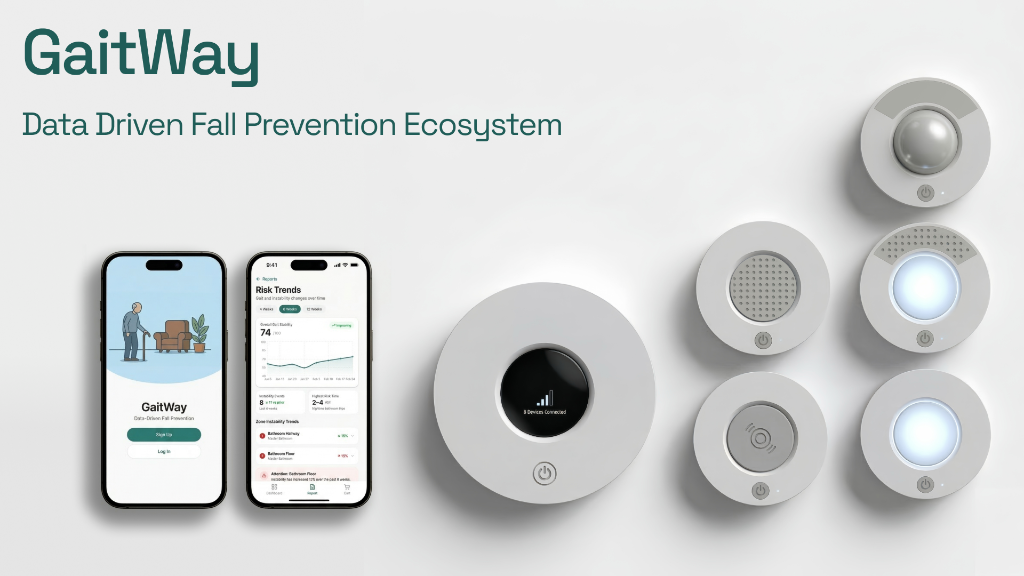
As my Master’s Thesis for Northwestern University’s MS in Engineering Design Innovation (EDI) program, GaitWay addresses one of the most critical healthcare crises facing aging adults: in-home falls.
While existing market solutions are almost entirely reactive—triggering alarms or emergency dispatches only after an older adult has already fallen—GaitWay rethinks the paradigm from crisis response to proactive, ambient prevention. By combining privacy-first mmWave radar sensing, ambient just-in-time sensory cues, a dedicated edge-computing Hub, and a digital-twin companion app, GaitWay protects aging adults moments before high-risk incidents—without surveillance or loss of autonomy.
Areas of responsibility: Product Strategy, End-to-End UX/UI Design, Hardware Industrial Design, User Research (11 seniors, 13 family caregivers, 3 geriatric experts), Go-to-Market Modeling
The Aging Crisis: The Reality of Falling at Home
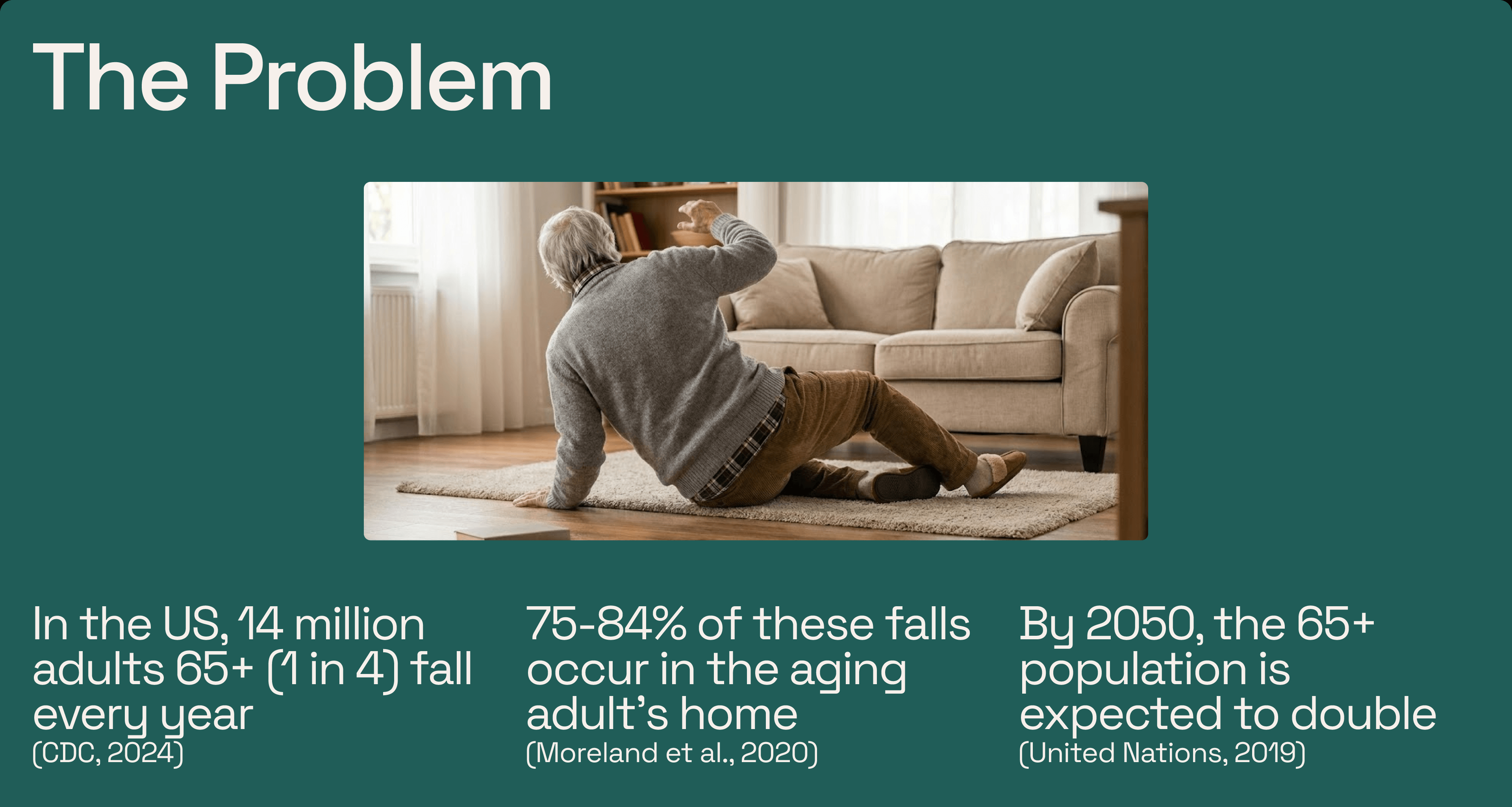
Aging at home gives residents comfort from familiarity in their environment and routines, independence and freedom to live on their own terms, and a sense of identity tied to their living space—leaving it can feel like losing a part of themselves. However, aging in place also presents devastating risks. For older adults, a single fall can be life-altering: debilitating hip fractures, head trauma, permanent loss of mobility, or loss of life.
Primary Research & Fieldwork Insights
To ground the project in real human experiences rather than assumptions, I conducted in-depth fieldwork with three interconnected stakeholder groups:
Aging Adults (65+)
Conducted in-depth contextual interviews exploring daily domestic routines, post-fall adaptations, emotional perceptions of aging, and privacy boundaries.
Family Caregivers
Interviewed adult children and primary caregivers managing the delicate tension between wanting safety assurance and respecting their parents' independence.
Geriatric & PT Experts
Consulted clinicians and physical therapists specializing in gait biomechanics, vestibular rehabilitation, and clinical fall risk assessment.
Synthesis of 13 firsthand fall experiences revealed three core insights that defined the design criteria. Notably, every single fall experience mapped to one of four predictable domestic scenarios:
Insight 01: Fall Scenarios Are Predictably Clustered in “Hot Spots”
Every single fall incident reported by interviewees occurred in one of four specific domestic scenarios:
- Sit-to-stand transitions: Rushing up from an armchair, sofa, or bed without allowing blood pressure and vestibular balance to stabilize.
- Poor nighttime visibility: Navigating from the bedroom to the bathroom in darkness.
- Turning while walking: Quick torso rotations where upper-body inertia outpaces foot placement.
- Navigating stairs and thresholds: Uneven footing, loose rugs, and step transitions.
“I got up from my chair and turned to answer the phone and the next thing I could remember was being on the floor with my wife over me.”
— Interviewee (Age 92)
Insight 02: The Cognitive Load of Mental Cues & Unnatural Biomechanics
Following a fall, physical therapists train seniors to practice conscious mental cues (e.g., “slow down, plant your heels, turn your feet before your torso”). While clinically sound, maintaining continuous hypervigilance creates immense cognitive fatigue and anxiety.
Paradoxically, clinical literature confirms that fear of falling increases fall probability: anxiety causes muscular stiffness, shortens stride length, and degrades fluid biomechanics (Auburn Health & UCI Health).
“Every time I turn now I tell myself to move my legs before my torso… At times it’s exhausting.”
— Interviewee (Age 79)
Insight 03: The Independence Paradox
Adult children live with constant “fear of not knowing” whether their parents are safe. Yet traditional surveillance solutions (baby monitors, indoor optical cameras) feel infantilizing and violating to seniors, creating resistance and shame.
“We installed a baby monitor in her bedroom after her fall and she was worried about us watching her 24/7… We didn’t even think about privacy concerns with the app.”
— Family Member of Aging Adult
Market Landscape: Identifying the Opportunity Space
The market is full of tools for responding to falls—but almost nothing exists to prevent them moments before they occur in a way that feels unintrusive. Mapping existing solutions across Intrusiveness vs. Fall Timing revealed this untapped white space:
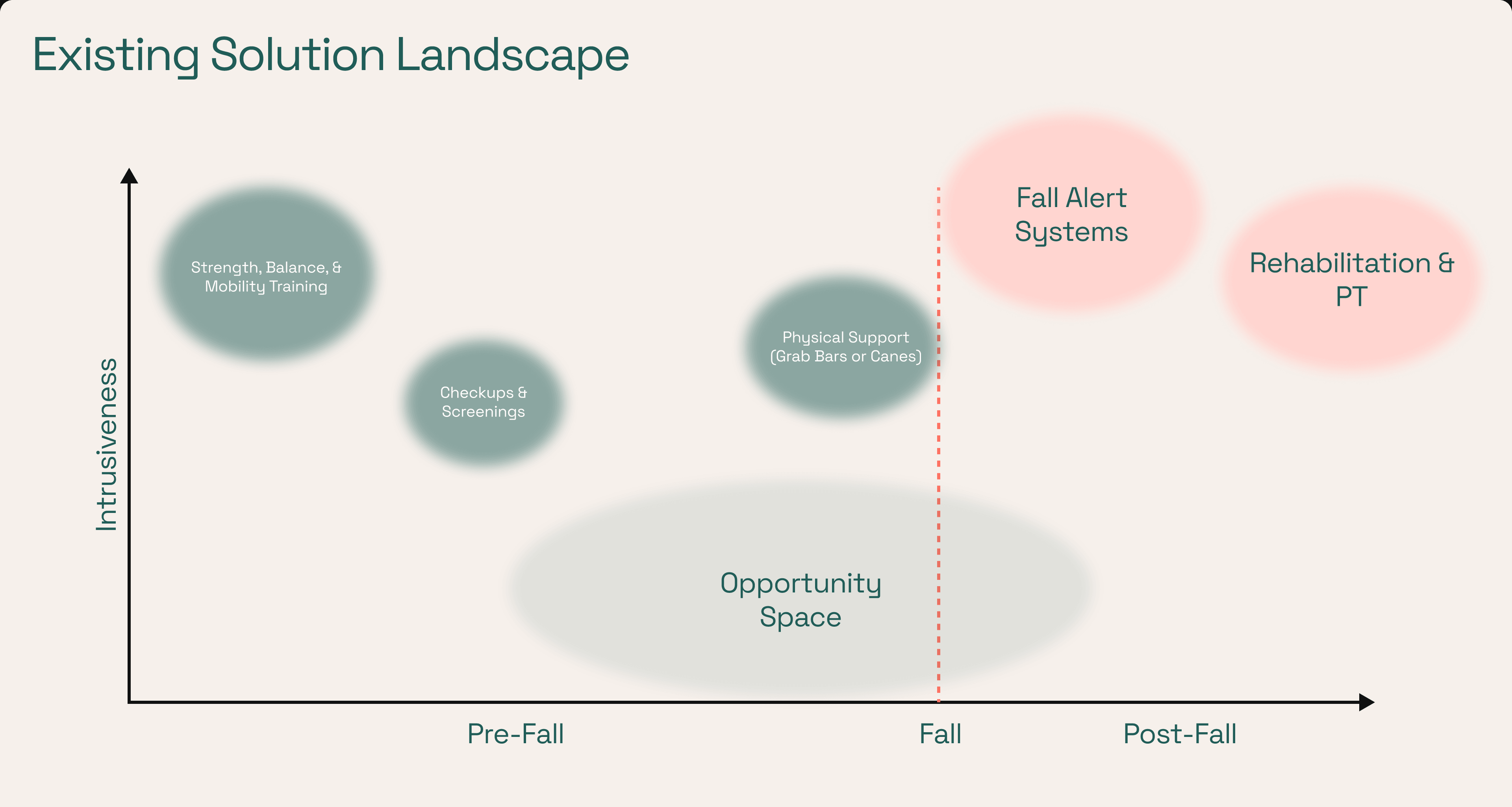
- Reactive alerts (High intrusiveness, Post-fall): Panic pendants, smartwatch fall detection, and pull cords only trigger after an injury has occurred—often when the senior is already incapacitated.
- Intrusive physical interventions (High effort, Pre-fall): Home grab bars, walker transitions, and rigorous physical therapy, while valuable, carry social stigma and do not provide situational real-time guidance.
- The Opportunity Space: An ambient, non-intrusive system acting just moments before a fall occurs, providing contextual prompts when high-risk conditions are detected.
Dual “How Might We” Problem Framing
For the Aging Adult
How might we identify high-risk areas in the home and offload the cognitive burden of mental cues by delivering gentle, just-in-time sensory nudges without inducing anxiety?
For Family & Caregivers
How might we provide meaningful visibility into their loved one's mobility and safety trends over time without making the senior feel monitored or dependent?
The Solution: The GaitWay Ecosystem
GaitWay combines sensors and just-in-time cues that warn aging adults the moment they enter a high-risk scenario, with a companion app that gives family members and caretakers the visibility they need—without the aging adult feeling watched. Every element is engineered around one design principle: “a nudge, not an alarm.”
mmWave Radar Sensing
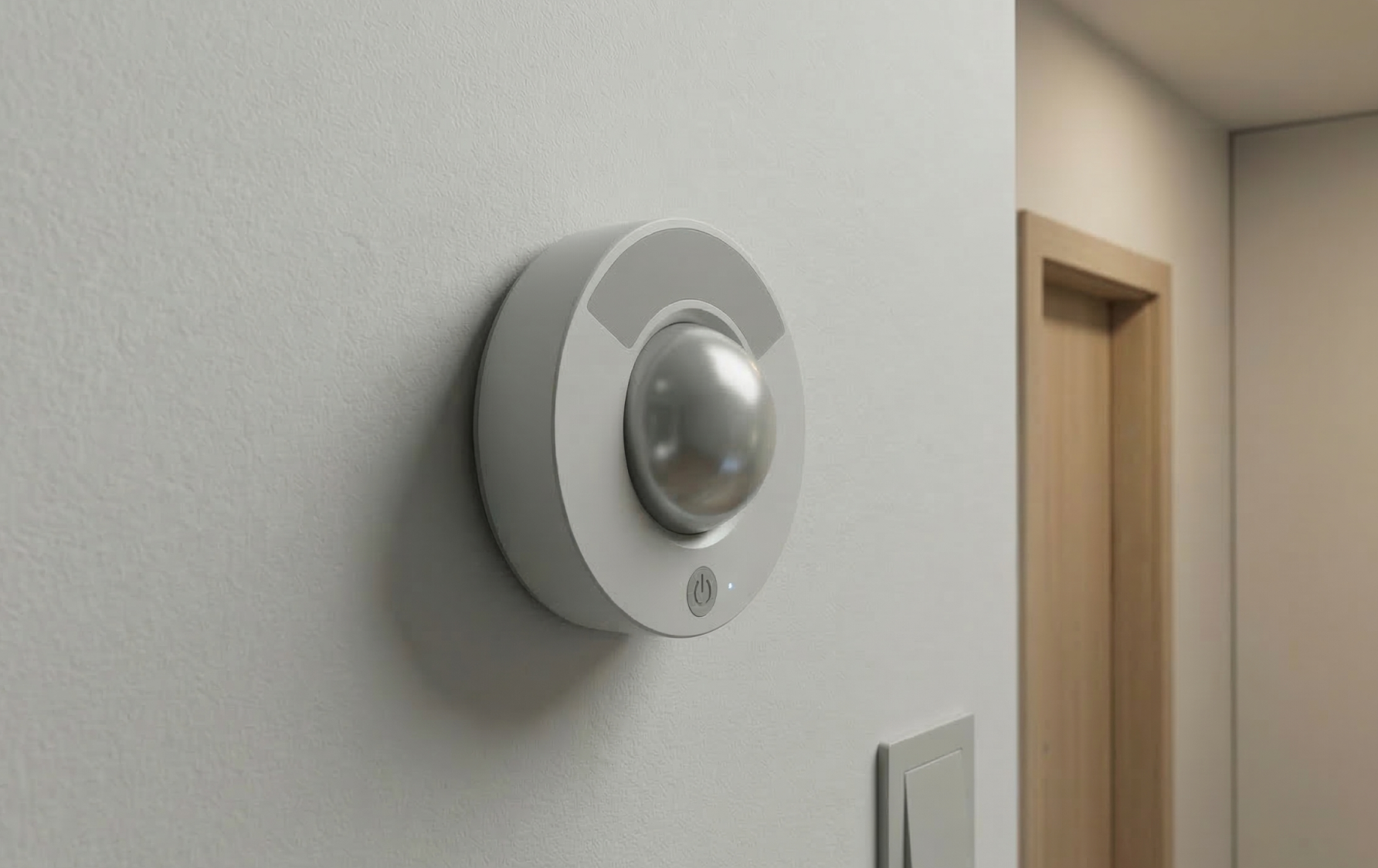
Wall-mounted micro-radar sensors track movement, analyze gait parameters, and detect falls through furniture without cameras or optical capture.
Just-in-Time Sensory Cues
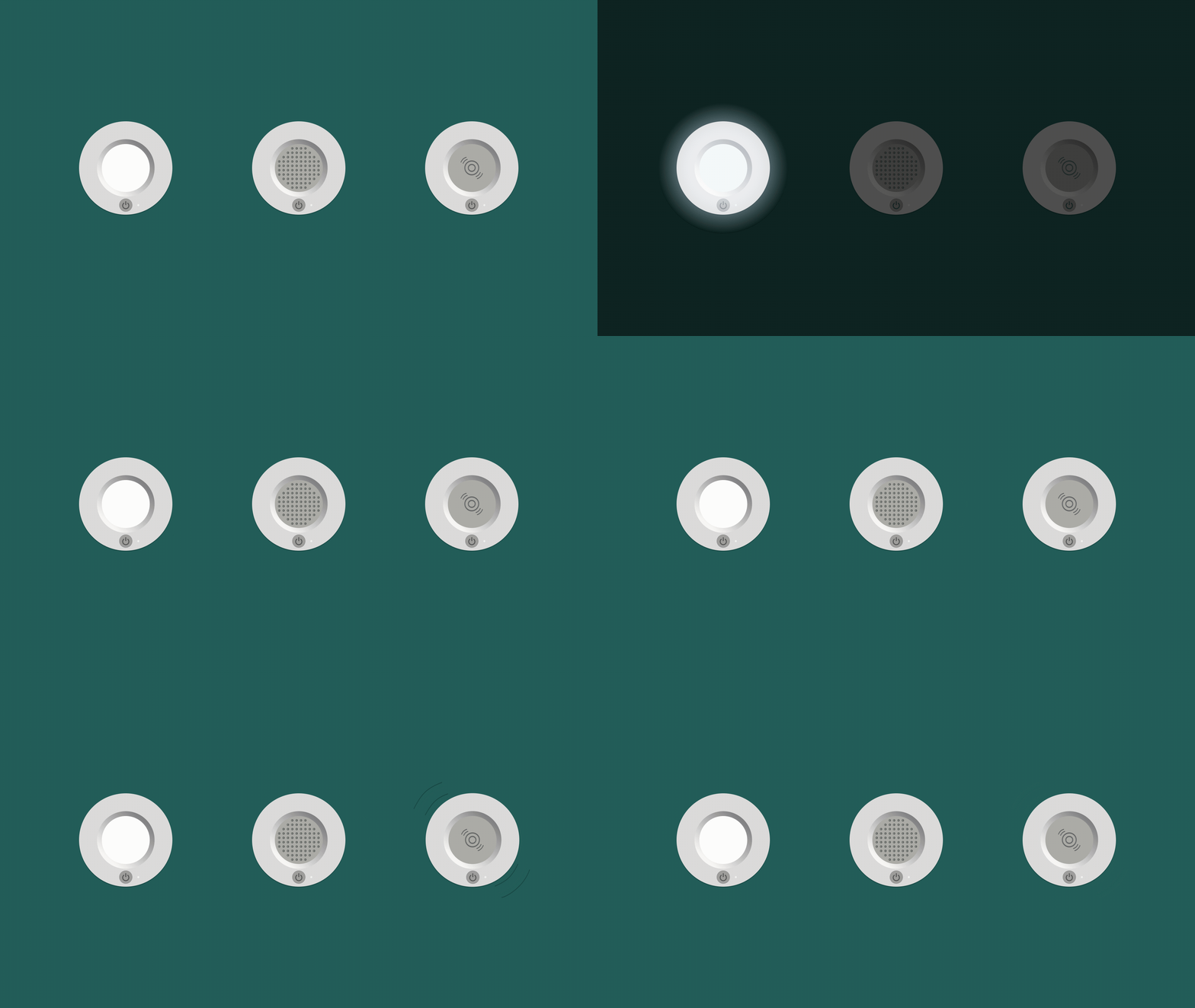
Modular ambient cues (LED light, chime audio, haptic pulses) placed near hot spots offer external reminders that replace internal mental stress.
Edge Hub Architecture
A dedicated central hub running a private Sub-1GHz network executes millisecond-level local logic for instant cueing and alerts.
Digital-Twin Mobile App
Using smartphone photogrammetry, the app creates a 3D digital twin of the home to identify hot zones and track long-term gait stability.
1. Hardware & Sensing Layer
Privacy-Preserving mmWave Radar
Traditional fall-detection cameras violate domestic privacy in bedrooms and bathrooms—the exact rooms where fall risk is highest. At the heart of GaitWay is the mmWave sensor: powerful enough to predict falls, analyze gait, and detect movement through furniture, yet privacy-preserving by design. No cameras. No images. Just the data needed to keep aging adults safe.
- Zero cameras or lenses: Emits high-frequency radio waves to calculate micro-Doppler signatures, velocity vectors, and point-cloud spatial coordinates.
- Through-furniture tracking: Detects body position even behind couches, armchairs, and shower curtains.
- 100% privacy-compliant: Telemetry contains zero identifiable imagery—only point-cloud motion dynamics.
Just-in-Time Ambient Cues
Paired with each sensor is a suite of just-in-time cues chosen based on the resident’s individual needs. These cues act as external reminders that replace the internal mental cues—and the cognitive stress that comes with them.
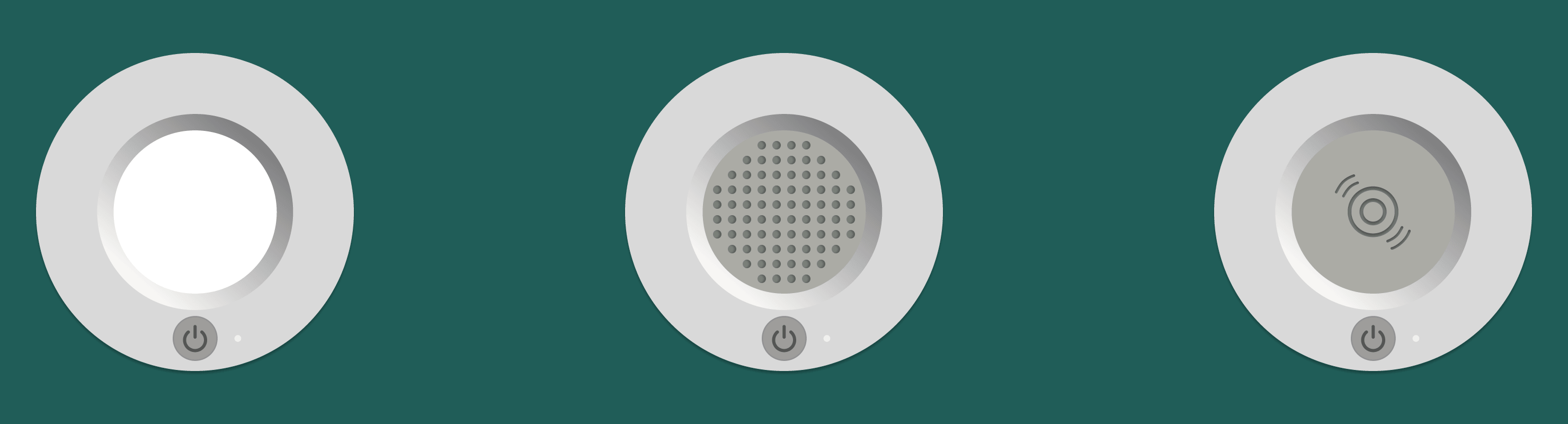
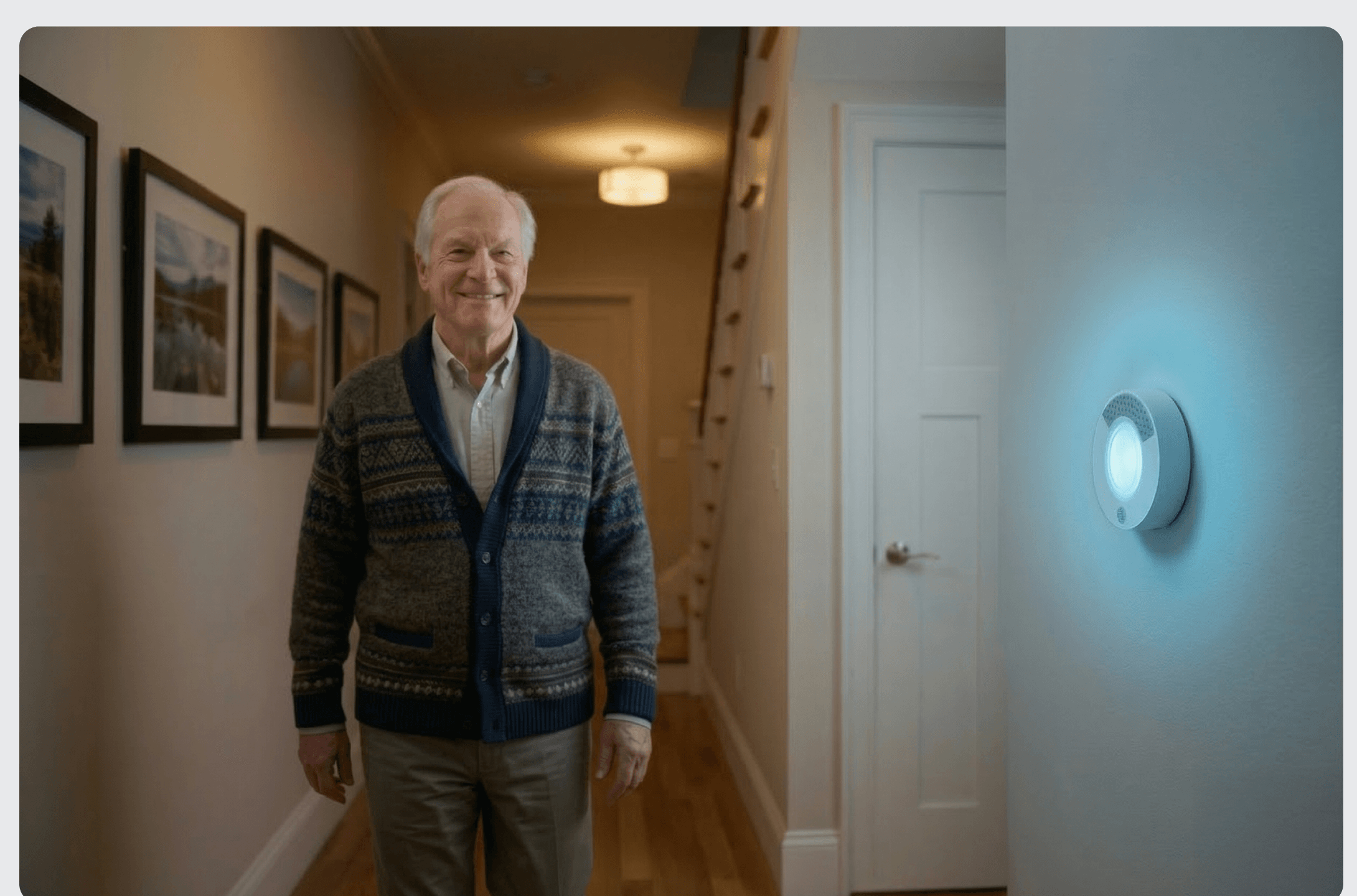
Imagine a resident preparing to stand from their armchair. The mmWave sensor detects the postural shift—and a paired cue activates:
- LED Visual Cue: A warm, gentle pulse of soft light illuminates as a reminder to pause and plant their feet before stepping.
- Chime Audio Cue: An organic, low-frequency tone plays via micro-perforated acoustic dispersion—designed for residents with visual impairments.
- Haptic Pulse Cue: Subtle vibration feedback through a wrist-worn puck for residents with visual or auditory impairments.
Every cue is designed to feel like a nudge, not an alarm.
Effortless Domestic Integration
Maintenance and setup were designed to be as effortless as the system itself. Both sensors and cues run for 4 weeks on a single charge, reducing the burden on family members for recharging. And with 3M magnetic adhesive mounting, installation takes minutes—no permanent fixtures, no damage to the home, no barriers to getting started.
2. Central Edge Architecture: The GaitWay Hub
Tying everything together is the GaitWay Hub—the brain of the ecosystem. Reliability is paramount in safety-critical home healthcare, and the Hub serves as the on-premise operational core:
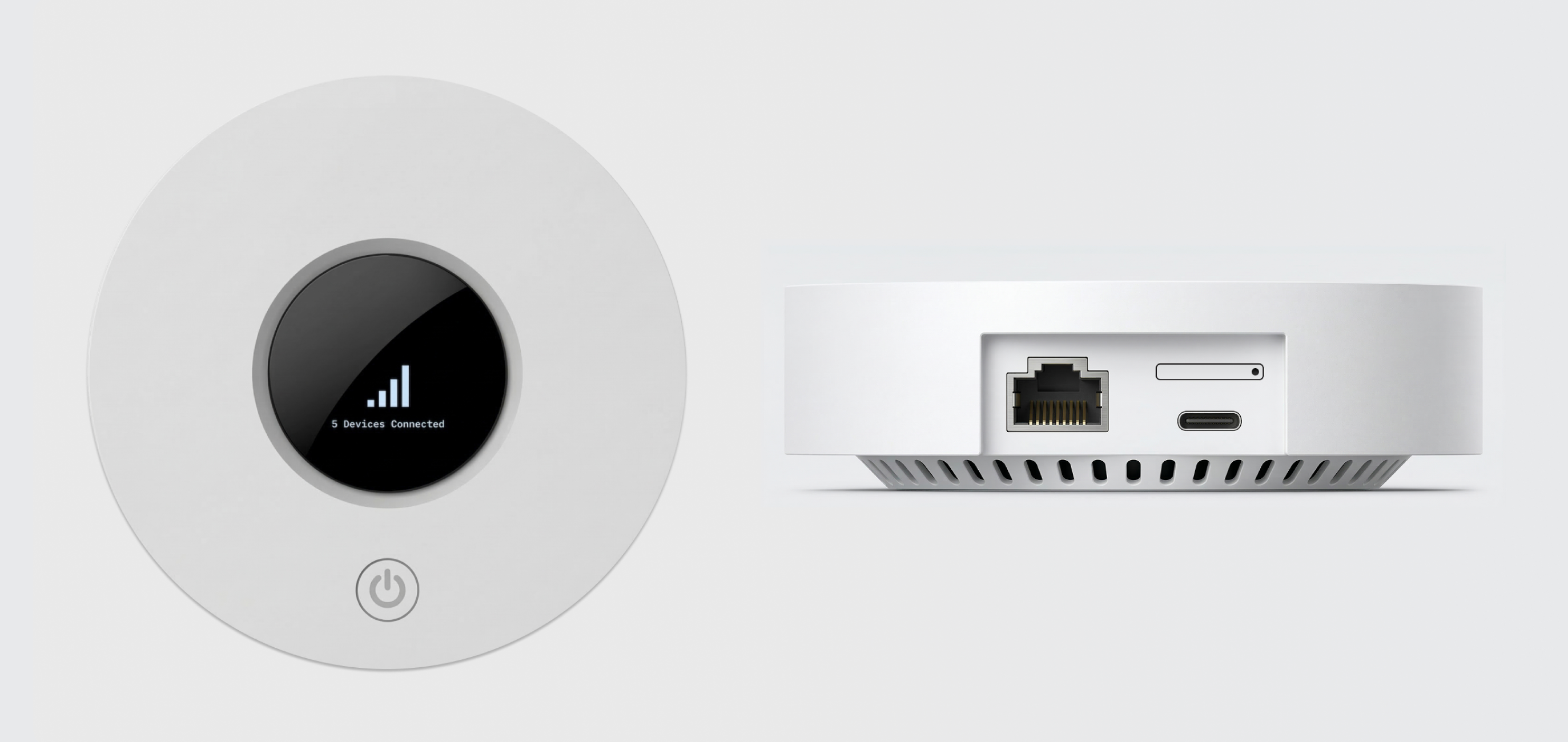
- Sub-1GHz RF Local Network: Instead of relying on crowded 2.4GHz home Wi-Fi that can suffer from dropouts or wall attenuation, the Hub communicates with sensors and cues over a dedicated long-range Sub-1GHz protocol that easily penetrates concrete and plaster walls.
- Local Edge Computing (<50ms Latency): All instantaneous decisions—evaluating whether a posture transition is unstable, firing the paired cue, or alerting emergency services—are processed entirely on-device at the edge, ensuring protection even during internet outages.
- Triple Uplink Redundancy: For longitudinal telemetry sync, the Hub connects via Gigabit Ethernet, Wi-Fi, and a built-in cellular SIM tray.
3. The Companion App: Spatial AI & Digital Twins
The second half of the ecosystem is the companion app, primarily designed for family members and caretakers. It spans four phases: Onboarding, Device Setup, Notifications, and Risk Reports—taking users from first scan to long-term visibility.
4. Business Model & Go-to-Market Strategy
GaitWay employs a proven land-and-expand business model designed to lower the barrier of adoption for worried families:
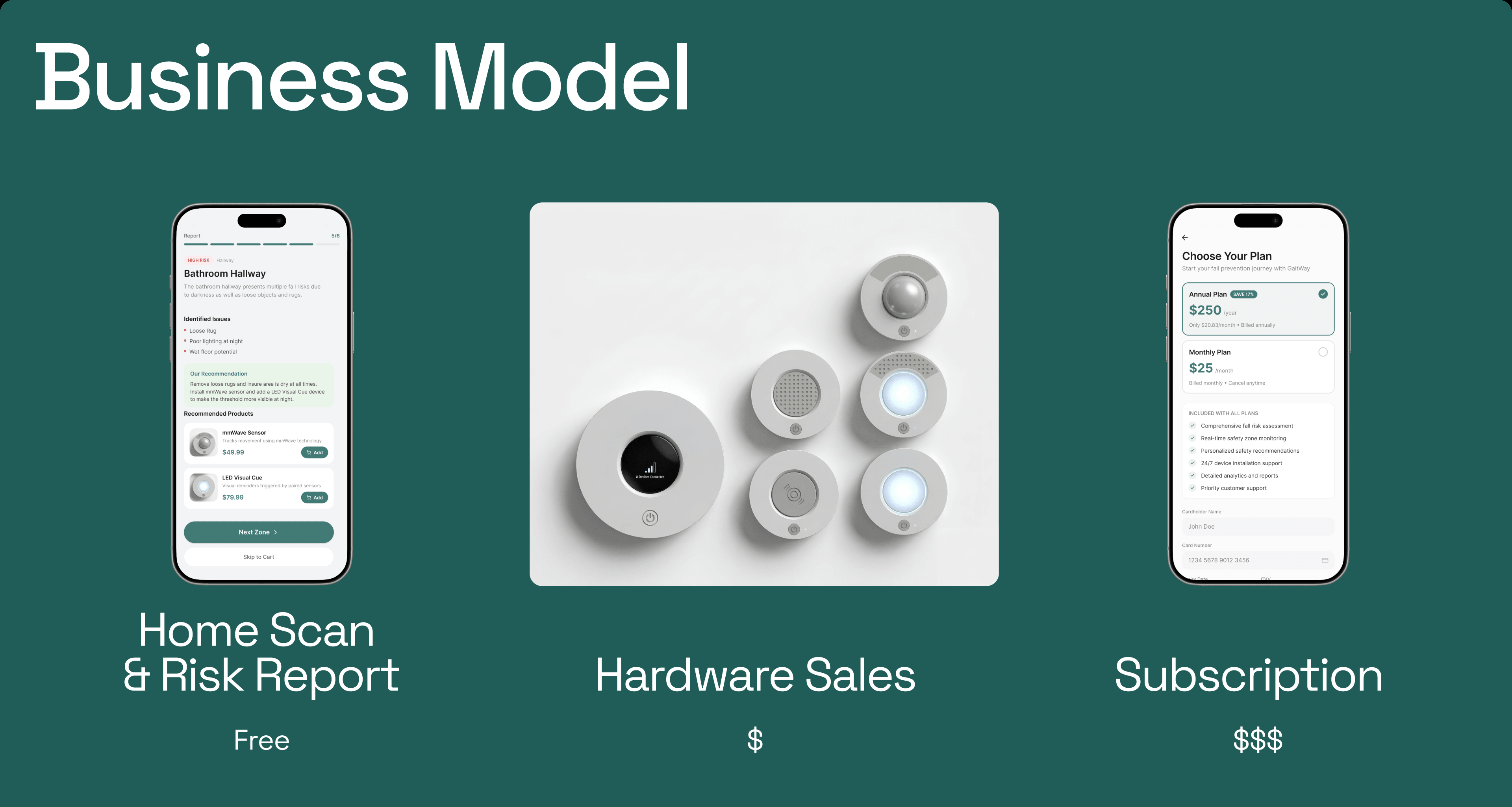
- Free Home Scan & Risk Report ($0): The free home scan and risk report brings families onto the platform with no commitment required—clearly demonstrating where safety vulnerabilities exist and building trust before any purchase.
- Hardware at Cost ($): Sensors ($49.99) and Cues ($79.99) are priced at cost to minimize friction at the point of purchase, removing the biggest barrier to adoption.
- Recurring Subscription ($$$): A monthly ($25/mo) or annual ($250/yr) subscription is where GaitWay generates its revenue—unlocking 24/7 radar telemetry, real-time cue coordination, caregiver alerts, and comprehensive risk trend reports.
Scalable Strategic Partnerships
Assisted Living Facilities
Opens a B2B channel where GaitWay can replace manual monitoring, reduce staff hours, and lower labor costs across entire facilities.
Medicare & Insurance Coverage
Insurance and Medicare partnerships could make GaitWay a covered preventive device, removing cost barriers for low-income seniors entirely.
Smart Home Ecosystems
Integrating with platforms like Amazon Alexa and Google Home puts GaitWay in front of customers already comfortable adding smart devices to their homes.
Thesis Reflections & Acknowledgements
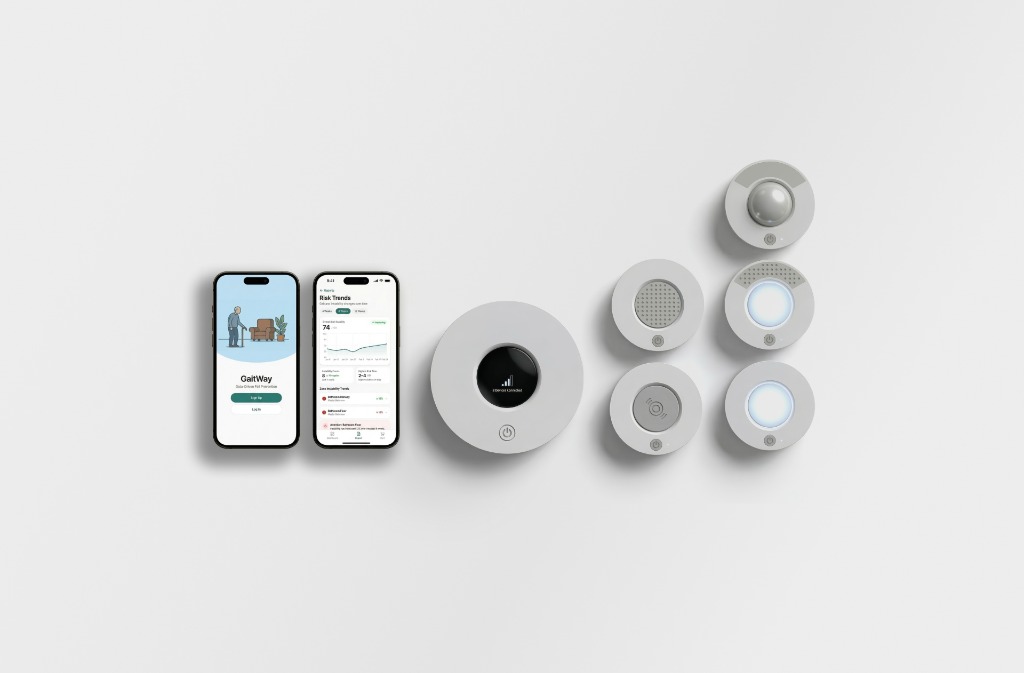
GaitWay brings together sensors, just-in-time cues, the Hub, and the companion app—each solving distinct pieces of the problem, and each made more powerful by the others. The result is a system that prevents falls before they happen, keeps families connected without being intrusive, and grows more effective the longer it’s in the home.
This thesis demonstrates that healthcare hardware for aging populations does not need to look medicalized, clinical, or stigmatizing. By applying human-centered design to cutting-edge radar and spatial computing, we can replace clinical surveillance with ambient, dignified support. Designing for aging adults taught me that the most impactful interventions are the ones people forget are even there—technology that protects without announcing itself.
“A nudge, not an alarm.”
Special thanks to my thesis advisors and mentors at Northwestern University:
- Mike Hyzy, Thesis Industry Mentor
- Jim Wicks, Director of MS EDI
- Amy O’Keefe, Clinical Professor & EDI Faculty
- Hema Mistry, Program Assistant
- The Northwestern MS EDI Class of 2026 for their continuous critique, testing, and encouragement.